
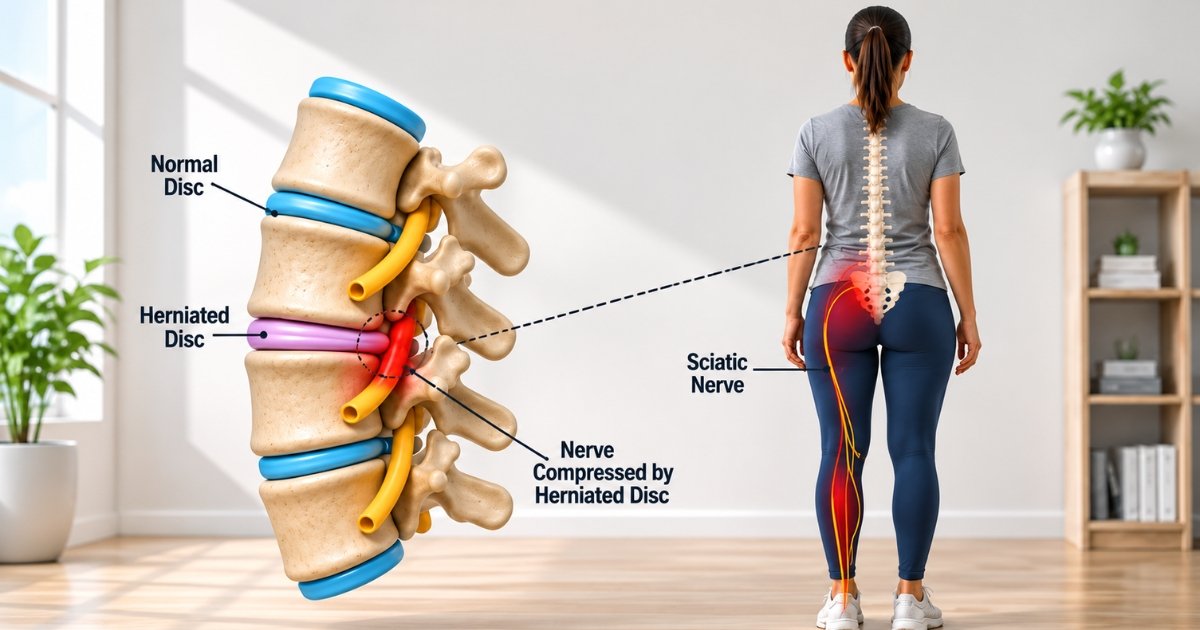
A slipped disc can cause back pain, pain that travels into the leg, tingling or numbness. In many people, these symptoms improve with appropriate treatment and time. However, a change in symptoms can sometimes indicate that the affected spinal nerve needs further medical assessment.
One important point is that more pain does not always mean that the slipped disc itself has become worse. Doctors look at the complete pattern of symptoms, changes in strength or sensation, physical examination findings, and, when appropriate, imaging such as an MRI.
Here are seven warning signs that should not be ignored.
1. Your leg pain is becoming more severe or spreading
Pain from a slipped disc can travel from the lower back into the buttock, thigh or leg when a spinal nerve is irritated or compressed.
If your leg pain is becoming progressively worse, lasting longer or spreading further down the leg, it is worth discussing the change with a doctor.
Increasing pain alone does not prove that the disc herniation has become larger. The pattern and progression of symptoms are important.
2. Numbness or tingling is increasing
A slipped disc can affect a spinal nerve and cause altered sensation along the area supplied by that nerve.
You may notice:
- Increasing numbness in the leg or foot
- Persistent tingling
- A larger area becoming numb
- Reduced sensation compared with the other leg
New or progressively worsening numbness should be medically assessed, particularly when it occurs together with weakness or increasing difficulty walking.
3. You are developing weakness in your leg or foot
New or worsening weakness is one of the symptoms that deserves particular attention.
Patients may describe weakness as difficulty lifting the front of the foot, standing on their toes or heels, climbing stairs, or performing movements that were previously easy.
Weakness is different from pain. Pain can fluctuate considerably, while a change in muscle strength may indicate that a nerve is being affected.
If you notice new or progressive weakness, arrange a medical assessment rather than relying only on pain relief or waiting for the symptoms to settle.
4. Walking or everyday movements are becoming difficult
A worsening nerve-related problem can affect function, not just comfort.
You may notice that you:
- Cannot walk as far as before
- Have difficulty climbing stairs
- Feel that one leg is less stable
- Change the way you walk because of pain or weakness
- Find normal daily activities increasingly difficult
A change in function provides useful information to a spine specialist because it helps show how the symptoms are affecting your neurological and physical function.
5. Your symptoms are not improving or are repeatedly getting worse
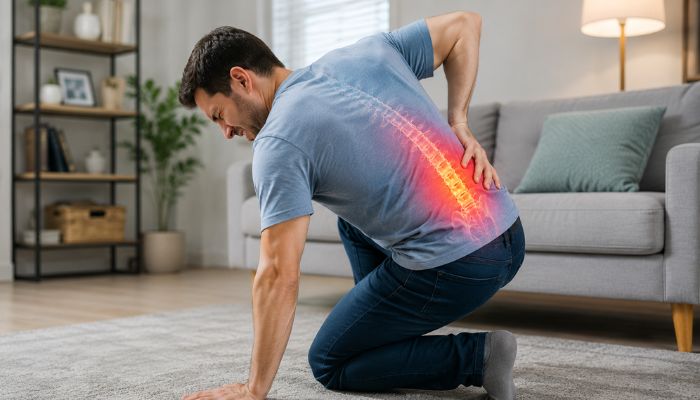
Many slipped disc symptoms improve over time with appropriate nonsurgical care. If symptoms remain persistent, repeatedly flare up, or progressively interfere with normal activities, a medical review may be appropriate.
This does not automatically mean that surgery is required.
A spine specialist may assess your symptoms, perform a neurological examination and decide whether further investigations are necessary.
6. You develop numbness around the saddle area
Numbness around the groin, genitals, buttocks, or inner thighs, sometimes described as the saddle area, is an important warning sign.
This symptom should not be treated as ordinary back pain.
Significant nerve compression in the lower spine can sometimes affect sensation in this region. If new saddle area numbness occurs, seek urgent medical assessment.
7. You develop new bladder or bowel problems
New difficulty controlling urine or bowel movements, inability to urinate, or a significant change in bladder or bowel function together with back or leg symptoms can be a medical emergency.
These symptoms can occur with serious compression of nerves in the lower spine.
Do not wait for a routine appointment if you develop new bladder or bowel dysfunction, saddle area numbness, or significant progressive weakness. Seek urgent medical assessment.
Does worsening pain always mean your slip disc is getting worse?
No. Pain intensity alone cannot determine whether a disc herniation has become anatomically worse.
Symptoms can fluctuate, and pain can increase for different reasons. A doctor considers the complete clinical picture, including the location and progression of pain, sensation, muscle strength, reflexes and functional changes.
An MRI may be recommended in selected situations, but an imaging finding needs to be interpreted alongside the person’s symptoms and examination.
When should you see a spine specialist?

If your symptoms are persistent, worsening, affecting your ability to walk or work, or accompanied by new numbness or weakness, a clinical assessment can help determine the next appropriate step.
For patients in Mumbai, Dr. Rakesh Dhake, a spine specialist at Zen Spine, can assess symptoms and determine whether further evaluation or treatment is appropriate.
The aim is not simply to identify a disc problem. It is to understand whether a spinal nerve is being affected and whether the symptoms require a change in management.
Understanding the warning signs can help you act at the right time
A slipped disc does not always follow the same pattern in every person. Increasing pain may need assessment, but new neurological changes such as progressive weakness, worsening numbness, saddle area numbness or bladder and bowel problems deserve particular attention.
Recognizing these changes early can help you seek appropriate medical care instead of trying to judge the severity of a disc problem from pain alone.
Frequently Asked Questions
Q1. Can a slipped disc get worse without severe back pain?
Answer: Yes. A person may develop increasing leg pain, numbness or weakness even when severe back pain is not the main symptom. New or progressive neurological symptoms should be medically assessed.
Q2. Is leg weakness from a slipped disc serious?
Answer: New or progressive leg weakness can be clinically important because it may indicate nerve involvement. It should be assessed by a medical professional, particularly if the weakness is getting worse.
Q3. When is a slipped disc an emergency?
Answer: New bladder or bowel dysfunction, inability to urinate, numbness around the saddle area, or significant progressive weakness require urgent medical assessment because they can indicate serious nerve compression.
Q4. Does every worsening slipped disc require surgery?
Answer: No. Worsening symptoms do not automatically mean surgery is necessary. Treatment depends on the symptoms, neurological findings, functional impact, duration, response to appropriate treatment, and other individual factors.
Q5. Can an MRI show whether my slipped disc is getting worse?
Answer: An MRI can show structural changes in the spine, including disc herniation. However, MRI findings do not always correspond directly with symptoms. Doctors interpret imaging together with the patient’s history and clinical examination.