
Being told that you have a bulging disc can be worrying, particularly if your back or neck pain is affecting your ability to work. Many patients immediately want to know whether a bulging disc means they have a disability, whether they can continue working, and whether they will eventually need surgery.
A bulging disc is not automatically a disability. The effect of the condition depends on your symptoms, whether a spinal nerve is irritated or compressed, and how much it limits your normal activities.
Some people have a bulging disc without any symptoms at all. Others may experience significant back pain, sciatica, numbness, or weakness that makes certain activities difficult.
At Zen Spine, Dr. Rakesh Dhake takes these factors into account rather than judging the severity of a condition from an MRI report alone.
What Is a Bulging Disc?
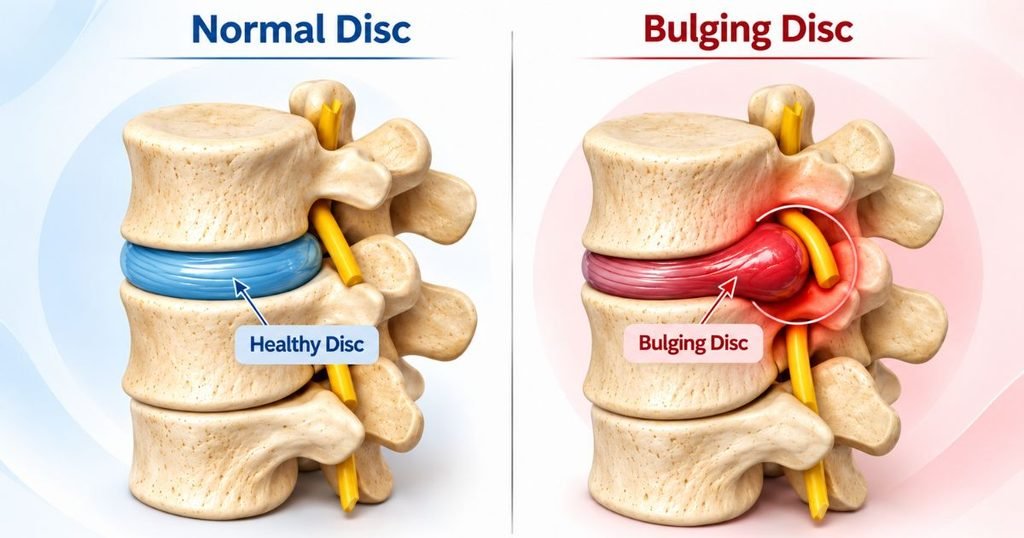
Your spine contains small, flexible structures called discs between the vertebrae. They help absorb shock and allow your spine to bend and move.
A bulging disc occurs when the outer portion of a spinal disc extends beyond its usual boundary. It can happen in different areas of the spine, although disc problems are particularly common in the lower back and neck.
A disc bulge does not always cause pain. Some people have disc changes that are discovered incidentally during an MRI scan performed for another reason.
Symptoms are more likely when the bulging disc irritates or compresses a nearby nerve. This can result in pain, tingling, numbness, or weakness.
It is also worth noting that a bulging disc is not necessarily the same as a herniated disc. Although people often use terms such as “bulging disc”, “slipped disc” and “herniated disc” interchangeably, they can describe different types of disc changes.
What Causes a Bulging Disc?
There is rarely one single cause of a bulging disc. Disc changes can develop gradually as part of the normal ageing process, while repeated physical stress or injury may also contribute.
Potential Causes and Risk Factors for a Bulging Disc
Factors that may contribute include:
- Age related changes in the spinal discs
- Repeated bending, lifting or twisting
- Repetitive physical strain
- Poor lifting or movement technique
- Previous spinal injury
- Prolonged periods of sitting or inactivity
- Excess body weight
- Smoking, which may affect disc health
- Activities that place repeated stress on the spine
Having one of these risk factors does not mean that you will necessarily develop symptoms. A person’s overall health, spinal anatomy and type of activity can all play a role.
What Are the Symptoms of a Bulging Disc?
A bulging disc can cause no symptoms, particularly when it does not affect nearby nerves.
When symptoms do occur, they can vary depending on the location of the disc and the nerves involved.
Common bulging disc symptoms include:
- Back pain or neck pain
- Pain that travels into the buttock or leg
- Sciatica
- Pain extending into the shoulder, arm or hand
- Numbness or tingling
- Muscle weakness
- Stiffness
- Difficulty with certain movements
- Pain that becomes worse with particular positions or activities
A bulging disc in the lower back can sometimes irritate a nerve that travels into the leg, resulting in sciatica.
A bulging disc in the neck can cause symptoms that extend from the neck into the shoulder, arm or hand.
The pattern of symptoms can be more important than the MRI finding itself. A disc bulge seen on a scan may not necessarily be the cause of your pain.
Is a Bulging Disc a Disability?
A bulging disc by itself does not automatically qualify as a disability.
The more important issue is whether the condition causes a significant and ongoing limitation in your ability to perform work or everyday activities.
For example, a person with a bulging disc but no pain may have no functional limitation. Another person with nerve compression may struggle with walking, sitting, standing, lifting or performing their usual occupation.
A formal determination of disability can also depend on the applicable medical, occupational and legal criteria. Therefore, an MRI report alone should not be considered proof of disability.
What Determines Whether a Bulging Disc Affects Your Ability to Work?
Several factors may need to be considered:
- Severity and duration of symptoms
- Presence of nerve pain, numbness or weakness
- Type of work you perform
- How long you need to sit or stand
- Whether your job involves lifting or repetitive movements
- Whether symptoms improve with treatment
- Whether reasonable changes to your work duties are possible
This is why two people with similar MRI findings can have very different levels of disability or work limitation.
Can You Work With a Bulging Disc?
In many cases, yes. A bulging disc does not automatically mean that you need to stop working.
The type of work you perform matters. Someone with a desk job may struggle with prolonged sitting, while someone involved in manual labour may have difficulty with repeated lifting, bending or twisting.
| Work activity | Possible problem when symptoms are active |
| Prolonged sitting | May increase back or neck discomfort |
| Heavy lifting | May aggravate pain or nerve symptoms |
| Repeated bending | Can increase discomfort in some people |
| Twisting movements | May aggravate symptoms |
| Long periods of standing | May worsen pain for some patients |
| Long distance driving | May become uncomfortable during active symptoms |
Depending on the person’s condition, temporary adjustments such as taking regular movement breaks, modifying lifting duties or avoiding activities that clearly worsen symptoms may be helpful.
The aim is generally not complete inactivity. It is to remain appropriately active while allowing symptoms to settle and gradually return to normal activities.
How Is a Bulging Disc Diagnosed?
Diagnosis usually begins with your medical history and a physical examination.
A doctor may assess your:
- Range of movement
- Muscle strength
- Reflexes
- Sensation
- Walking pattern
- Areas of pain and nerve related symptoms
An MRI scan can provide detailed images of the spinal discs and nerves. It may be recommended when symptoms persist, when nerve compression is suspected or when the examination suggests that imaging could help guide treatment.
However, an MRI finding needs to be interpreted in context. Disc bulges can occur in people who have little or no pain.
At Zen Spine, Dr. Rakesh Dhake considers the symptoms, clinical examination, and imaging findings together when assessing a patient with suspected disc-related pain.
What Is the Treatment for a Bulging Disc?
Treatment depends on the symptoms and the underlying problem. Not everyone with a bulging disc needs surgery.
Non Surgical Bulging Disc Treatment
Many people can initially be managed with non surgical treatment.
Depending on the individual case, this may include:
- Activity modification
- Physiotherapy
- Appropriate exercises
- Medication for pain or inflammation when medically suitable
- Improving movement and posture habits
- A gradual return to normal activities
The goal is to reduce symptoms while helping the person regain movement and function.
Treatment should be individualised because the same approach may not be suitable for everyone with a disc bulge.
When Might Surgery Be Considered?
Surgery is not normally recommended simply because an MRI shows a bulging disc.
A spine specialist may consider surgery when there is a clear clinical reason, such as persistent symptoms despite appropriate non surgical treatment or significant nerve compression.
Surgery may also become more important when neurological problems, such as progressive muscle weakness, develop.
The type of surgery, if required, depends on the location of the problem, the affected nerve and the underlying cause of the symptoms.
How Long Does a Bulging Disc Take to Heal?
Recovery varies considerably from one person to another.
Some people improve over a relatively short period with appropriate conservative treatment, while symptoms can persist for longer in others.
Recovery may depend on factors such as:
- The location and severity of the disc problem
- Whether a nerve is irritated or compressed
- Duration of symptoms
- Overall physical health
- Type of work and daily activities
- Response to treatment
Rather than focusing only on how quickly the MRI changes, it is usually more useful to monitor whether pain, movement, strength and everyday function are improving.
Can a Bulging Disc Get Worse?
A bulging disc can remain stable, improve or become more symptomatic depending on the underlying condition and individual circumstances.
A flare up of pain does not necessarily mean that the disc has suddenly become severely damaged. Symptoms can sometimes change with activity, inflammation or nerve irritation.
However, new or progressively worsening weakness, significant numbness or other neurological symptoms should be medically assessed.
Should You Exercise With a Bulging Disc?
Having a bulging disc does not automatically mean that you should stop exercising.
In many cases, appropriate movement and exercise can form an important part of recovery. However, the right exercises depend on the individual’s symptoms and diagnosis.
Activities that clearly increase pain or neurological symptoms may need to be modified temporarily.
A physiotherapist or spine specialist can help determine which movements are appropriate and how activity can be increased safely.
Frequently Asked Questions
Can I work a desk job with a bulging disc?
Many people can continue working at a desk with a bulging disc. Prolonged sitting may aggravate symptoms in some patients, so changing position regularly and taking movement breaks may be helpful.
If pain, numbness or weakness is significantly affecting your ability to work, you should discuss your symptoms with a healthcare professional.
Can I lift weights with a bulging disc?
Not necessarily. Whether you can safely lift weights depends on your symptoms, diagnosis and physical condition.
Heavy lifting, repeated bending and twisting may aggravate symptoms in some people. It is usually better to return to demanding activities gradually rather than immediately returning to previous levels of lifting.
Can a bulging disc cause permanent nerve damage?
A bulging disc can cause nerve compression, but the presence of a disc bulge does not mean that permanent nerve damage will occur.
Persistent or severe nerve compression can require medical assessment, particularly if there is progressive weakness or significant loss of sensation.
Can a bulging disc cause leg pain without back pain?
Yes. A bulging disc in the lower back can irritate a spinal nerve and cause pain travelling into the buttock or leg. Some people may experience predominantly leg symptoms rather than significant back pain.
Why does my bulging disc hurt more when I sit?
Prolonged sitting can aggravate symptoms in some people because of the position of the lower back and the sustained load placed on the spine. However, the reason for increased pain varies between individuals.
Changing position regularly and avoiding long periods in one position may help, but persistent symptoms should be assessed.
Can a bulging disc heal on its own?
Symptoms from a bulging disc can improve without surgery in many people. Improvement may occur with appropriate activity modification, physiotherapy, medication where suitable and gradual rehabilitation.
Whether a particular disc problem will improve depends on the individual’s condition.
Is surgery always needed for a bulging disc?
No. Most people with a bulging disc do not automatically need surgery.
Surgery is generally considered when there is a clear clinical indication, such as persistent symptoms despite appropriate treatment, significant nerve compression or concerning neurological changes.
Can I sleep normally with a bulging disc?
Many people with a bulging disc can sleep normally, although pain may make certain positions uncomfortable.
Finding a position that reduces symptoms and avoiding positions that consistently aggravate pain may help. If pain regularly prevents sleep, it is worth discussing this with a healthcare professional.
Does an MRI show how serious a bulging disc is?
Not by itself.
An MRI can show the location and appearance of a disc bulge, but the scan does not always indicate how much pain or disability a person will experience.
The MRI findings should be considered together with symptoms and physical examination findings.
When Should You See a Spine Specialist?
You should consider a medical assessment if back or neck pain persists, repeatedly returns or begins interfering with work and daily activities.
You should seek urgent medical attention if you develop new bladder or bowel control problems, significant loss of sensation or progressive weakness.
These symptoms can indicate serious nerve compression and should not be ignored.
At Zen Spine, Dr Rakesh Dhake assesses the underlying cause of symptoms before recommending treatment. This approach helps distinguish between a disc finding that requires observation and a disc problem that may need active treatment.
What Should You Do If You Have a Bulging Disc?
A bulging disc does not automatically mean that you are disabled, unable to work, or destined to have surgery.
What matters is how the condition affects your symptoms, nerves, movement, and everyday function.
Many people can improve with appropriate nonsurgical treatment and a gradual return to normal activities. If your symptoms are persistent, worsening, or interfering with your work, getting an appropriate assessment can help you understand the cause and choose the right treatment.
If you have been diagnosed with a bulging disc, Zen Spine can help you understand what the MRI findings mean in relation to your symptoms. Dr. Rakesh Dhake can assess your condition and discuss appropriate treatment options based on your individual needs.