

Yes. Osteoporosis can cause vertebral compression fractures with little or no noticeable pain. These are sometimes called silent vertebral fractures. Because the fracture may not produce obvious symptoms, some people discover it only when spinal imaging is performed for another reason.
A vertebral fracture is important to identify because it can affect posture, height, mobility and future fracture risk. If you have osteoporosis and develop new back pain, loss of height or increasing stooping, a medical evaluation can help determine whether a vertebral fracture may be present.
What Is a Silent Vertebral Fracture?
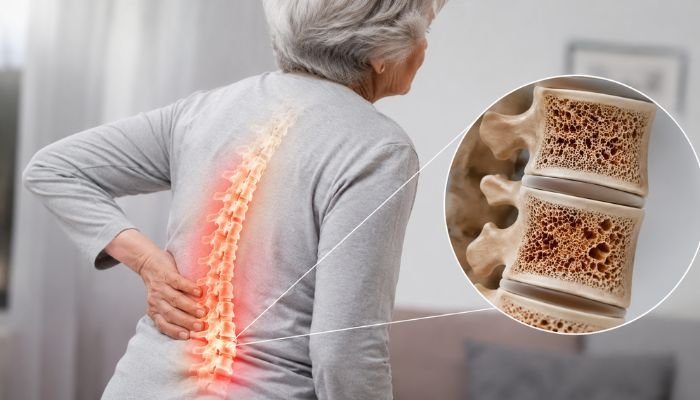
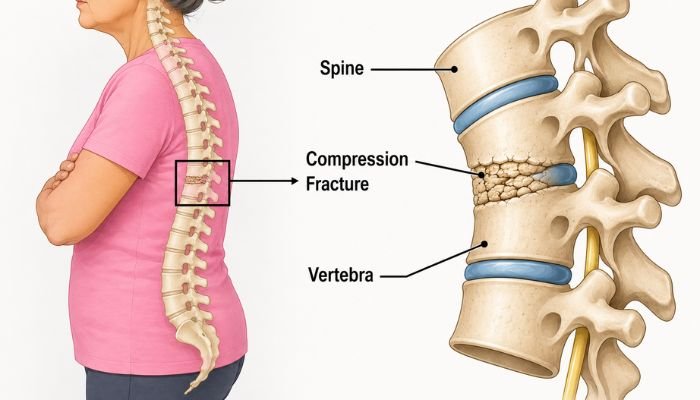
A vertebral compression fracture occurs when one of the bones (vertebrae) in the spine weakens and partially collapses.
With osteoporosis, bones become less dense and more fragile. A weakened vertebra may fracture after a fall or relatively minor strain, and in some cases a fracture can occur without a clearly remembered injury.
A silent vertebral fracture does not necessarily mean that the fracture is clinically unimportant. It means that the fracture may cause few or no obvious symptoms.
Symptoms and Warning Signs

Not everyone with an osteoporosis-related vertebral fracture will experience severe pain. Possible warning signs include:
- New or sudden back pain
- Persistent or worsening back pain
- Pain after a minor fall, movement or strain
- Loss of height over time
- Increasing forward curvature or stooping of the back
- Reduced mobility or difficulty performing usual activities
The absence of severe back pain does not necessarily rule out a vertebral fracture. If you have osteoporosis and notice a significant change in your back, height or mobility, discuss it with your doctor.
New weakness, significant numbness, difficulty walking, loss of bladder or bowel control, or severe rapidly worsening symptoms require prompt medical assessment.
How Are Silent Spine Fractures Diagnosed?
Diagnosis depends on the person’s symptoms, medical history and clinical findings.
Imaging may be used when a vertebral fracture is suspected. An X-ray can show many vertebral compression fractures, while MRI or CT may be appropriate in selected situations to provide additional information.
A DEXA (DXA) scan is primarily used to measure bone mineral density and help assess osteoporosis and fracture risk. It is not the same as an X-ray used to identify a vertebral fracture.
This distinction is important: bone-density testing and fracture imaging answer different clinical questions.
Treatment Options
Treatment depends on the severity and age of the fracture, pain, overall health, neurological findings and the person’s underlying osteoporosis.
Management may include:
- Pain management where appropriate.
- Activity modification and rehabilitation based on clinical advice.
- Treatment of osteoporosis to reduce the risk of additional fractures.
- Physiotherapy and fall-prevention measures when appropriate.
- Spine procedures or surgery in selected patients, particularly when symptoms, fracture characteristics or neurological problems require more specialised treatment.
Not every vertebral compression fracture requires surgery. The appropriate treatment should be determined after an individual assessment.
Why Does a Vertebral Fracture Matter if It Does Not Hurt?
A silent fracture should not simply be ignored. A vertebral fracture can be a sign of underlying skeletal fragility and may be associated with an increased risk of additional fractures.
Identifying the fracture gives the doctor an opportunity to assess the person’s bone health and consider appropriate measures to reduce future fracture risk.
When Should You See a Spine Specialist?
If you have osteoporosis and develop new or persistent back pain, unexplained loss of height, increasing stooping, or symptoms following a minor fall or movement, medical evaluation may be appropriate.
A spine specialist can assess whether the symptoms could be related to a vertebral fracture or another spinal condition and determine whether further imaging or treatment is needed.
For patients in Mumbai, Dr. Rakesh Dhake, Orthopedic Spine Specialist at Zen Spine, provides specialist evaluation for spinal conditions. The appropriate assessment depends on the individual’s symptoms and clinical history.
Frequently Asked Questions
Q1. Can osteoporosis cause a spinal fracture without pain?
Answer: Yes. Osteoporosis can weaken the vertebrae enough for a compression fracture to occur with little or no noticeable pain. Such fractures are sometimes described as silent vertebral fractures and may be identified incidentally on spinal imaging.
Q2. What is a silent vertebral fracture?
Answer: A silent vertebral fracture is a fracture of a spinal vertebra that causes few or no obvious symptoms. It can occur in people with osteoporosis and may only become apparent when imaging is performed for another reason or when changes such as loss of height or spinal curvature develop.
Q3. Can a DEXA scan detect a spine fracture?
Answer: A DEXA scan primarily measures bone mineral density and helps assess osteoporosis and fracture risk. It is different from diagnostic spinal imaging, such as an X-ray, which may be used to identify a vertebral compression fracture.
Q4. What are the warning signs of a vertebral compression fracture?
Answer: Possible warning signs include new back pain, persistent pain, loss of height, increasing stooping and reduced mobility. However, some vertebral fractures can cause few or no symptoms, so symptoms alone cannot always exclude a fracture.
Q5. Does every osteoporosis-related spine fracture require surgery?
Answer: No. Many vertebral compression fractures can be managed without surgery, depending on the individual circumstances. Treatment may involve pain management, rehabilitation and osteoporosis care, while selected patients may require a procedure or surgery.
Q6. When should I see a doctor for osteoporosis-related back pain?
Answer: You should seek medical assessment for new, persistent or significant back pain if you have osteoporosis, particularly after a minor fall or strain. Urgent assessment is appropriate for symptoms such as new weakness, significant numbness, difficulty walking or loss of bladder or bowel control.