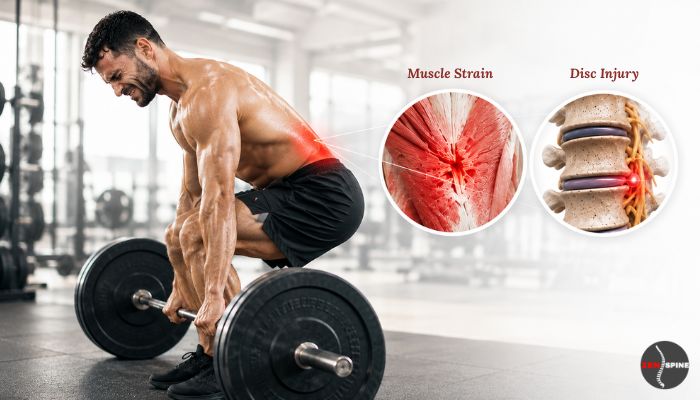
You complete a heavy deadlift session and notice tightness in your lower back. A few hours later, bending forward becomes painful. By the next morning, even getting out of bed feels uncomfortable. For many people who develop lower back pain after gym workouts, the first concern is whether they have damaged a spinal disc.
In many cases, back pain after weight lifting is caused by muscle strain and improves with rest, movement modification, and physiotherapy. However, pain that travels into the leg, causes numbness, or persists beyond a few weeks may suggest a lumbar disc injury or nerve irritation. Understanding the difference between muscular pain and spinal pain can help patients seek the right treatment early and avoid worsening the injury.
Weightlifting can place significant stress on the lower spine, especially during deadlifts, squats, overhead lifting, and high intensity training. Poor lifting technique, weak core stability, fatigue, and sudden increases in training load are common contributors to gym related back injuries.
What Does a Muscle Strain Feel Like?
A lower back muscle strain happens when muscles or supporting soft tissues are overloaded or stretched beyond their normal capacity. This is common after improper lifting posture, sudden twisting movements, or lifting heavier weights than the body is prepared for.
Typical symptoms include:
- Localised pain in the lower back
- Muscle spasm or tightness
- Stiffness after activity
- Discomfort while bending or changing position
- Gradual improvement over several days
Muscular pain usually stays around the lower back area and does not travel down the leg. Many people describe it as a dull ache, tightness, or soreness rather than sharp nerve pain.
Simple movements may feel difficult during the first few days, but symptoms often improve steadily with relative rest, gentle mobility, and physiotherapy guided rehabilitation.
What Does a Disc Injury Feel Like?
A spinal disc sits between the bones of the spine and acts as a shock absorber. Heavy lifting injuries can sometimes place excessive pressure on the lumbar disc, particularly when lifting form breaks down under load.
A disc injury may involve a disc bulge or disc herniation. Some people refer to this as a slipped disc after deadlift training or intense gym workouts.
Unlike muscular strain, disc related pain often affects nearby nerves. Common symptoms include:
- Sharp lower back pain after lifting weights
- Pain spreading into the buttock or leg
- Tingling or numbness
- Sciatica symptoms
- Pain while sitting, coughing, or sneezing
- Weakness in the leg or foot
Radiating leg pain is one of the clearest signs that the problem may involve nerve compression rather than muscle strain alone.
Muscle Strain vs Disc Injury: Key Differences
| Feature | Muscle Strain | Disc Injury |
| Pain location | Mainly lower back | Lower back with leg pain |
| Pain type | Tight, sore, aching | Sharp, burning, radiating |
| Numbness or tingling | Usually absent | May be present |
| Pain while sitting | Less common | Common |
| Recovery pattern | Often improves within days | Can persist longer |
| Sciatica symptoms | Rare | More likely |
Many people ask, “How do I know if my back pain is muscle or disc?” The answer often depends on symptom pattern. Pain limited to the lower back usually points towards muscular strain, while pain extending below the knee may indicate irritation of spinal nerves.
An MRI scan is not always required immediately. However, persistent symptoms, worsening nerve pain, or weakness may require imaging and specialist evaluation.
Can Deadlifts Cause Disc Injury?
Deadlifts themselves are not inherently dangerous. In fact, when performed correctly, they can strengthen the muscles supporting the spine. Problems usually arise when spinal posture is compromised, loads increase too quickly, or fatigue affects lifting mechanics.
Common risk factors for weightlifting back injury include:
- Rounding of the lower spine during lifting
- Poor core control
- Lifting excessive weight too quickly
- Repetitive overload without recovery
- Inadequate warm up and mobility
Many gym related spinal injuries develop gradually rather than from one single movement.
When Does Back Pain Become Serious?
Most episodes of lower back pain after gym workouts settle within days to weeks. However, some symptoms should not be ignored.
Seek medical attention if you notice:
- Severe pain travelling down the leg
- Numbness or progressive weakness
- Difficulty walking or standing
- Loss of bladder or bowel control
- Pain that continues despite rest and rehabilitation
These symptoms may indicate significant nerve involvement and require prompt clinical assessment.
Can Physiotherapy Help Lower Back Pain After Gym Workouts?
Physiotherapy is commonly recommended for both muscular back pain and recovery after disc-related injury. The goal is not only to reduce pain, but also to improve spinal stability and reduce the risk of recurrence.
Treatment may include guided movement therapy, flexibility work, posture correction, and progressive core strengthening. Rehabilitation is usually tailored according to the type of injury, activity level, and training goals.
For many people, early rehabilitation helps restore confidence with movement and allows a safer return to gym activity.
Importance of Correct Lifting Technique
The lower spine tolerates load more effectively when lifting posture is controlled and the surrounding muscles work efficiently together. Maintaining a neutral spine, engaging the core, and progressing weight gradually can reduce excessive strain on spinal discs and supporting tissues.
Office workers who suddenly return to intense training after long periods of inactivity may be particularly vulnerable to injury. Reduced flexibility, prolonged sitting, and weak core muscles can increase stress on the lumbar spine during heavy lifting.
Paying attention to recovery, sleep, and training volume is equally important. Persistent stiffness or repeated episodes of pain should not be dismissed as a normal part of exercise.
Back pain after weightlifting is often manageable with early attention to symptoms, proper rehabilitation, and a sensible return to training. Muscle strain typically causes localised soreness and stiffness, while disc injuries are more likely to produce radiating pain, numbness, or sciatica symptoms due to nerve irritation. Identifying these differences early can help patients make informed decisions about recovery and medical care.
When Should You See a Spine Specialist?
If lower back pain continues beyond a few weeks, keeps returning during workouts, or begins affecting daily activities, a clinical evaluation is important. Persistent nerve symptoms such as tingling, weakness, or radiating leg pain should also be assessed properly.
Dr. Rakesh Dhake regularly treats patients with gym related back pain, lumbar disc problems, and sports related spinal injuries in Mumbai. A detailed examination can help determine whether symptoms are muscular, disc related, or linked to movement mechanics that need correction.
Don’t Ignore Persistent Back Pain After Gym Workouts
Many people who experience back pain after weightlifting assume the worst immediately and stop all physical activity. In reality, most gym related back pain improves when the underlying cause is identified early and managed appropriately. Understanding whether symptoms are muscular or related to a spinal disc can make recovery safer and more predictable.
If pain keeps returning during deadlifts, squats, or routine workouts, it is worth paying attention to what the body is signalling rather than training through discomfort. Persistent symptoms, especially those involving leg pain, numbness, or weakness, should be evaluated carefully to avoid ongoing strain on the spine and surrounding nerves.
FAQs
Q1. Can weight lifting cause a slipped disc?
Answer: Heavy lifting can contribute to disc injury if excessive pressure is placed on the lumbar spine, particularly with poor lifting technique or sudden overload.
Q2. How do I know if my back pain is muscular or spinal?
Answer: Muscular pain is usually localised to the lower back, while spinal disc pain may radiate into the leg and cause numbness or tingling.
Q3. Should I stop gym workouts after back pain?
Answer: Heavy lifting should usually be avoided temporarily, but complete bed rest is not generally recommended. Gradual movement and rehabilitation are often beneficial.
Q4. Can physiotherapy help lower back pain after gym workouts?
Answer: Yes. Physiotherapy can help improve spinal stability, reduce pain, restore movement, and support safer return to exercise.
Q5. When should I see a spine specialist for back pain?
Answer: Medical assessment is recommended if pain persists beyond a few weeks, radiates into the leg, causes weakness, or repeatedly returns during activity.