
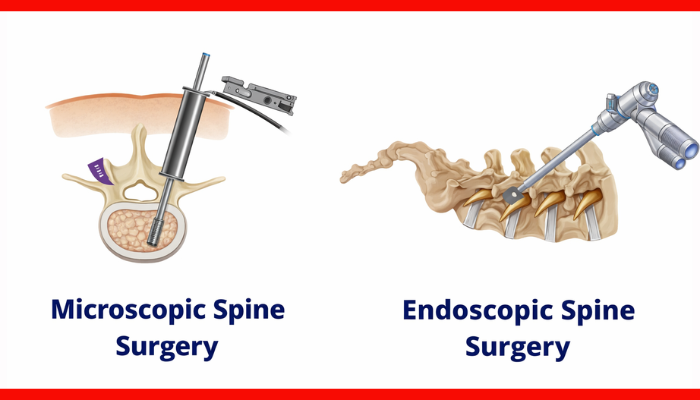
When back pain or sciatica begins to affect daily life, choosing the right treatment becomes important. Many patients today are advised to consider minimally invasive procedures that focus on faster recovery and reduced discomfort.
Two commonly recommended options are endoscopic spine surgery and microscopic spine surgery. Understanding the difference between these approaches can help you make a confident and informed decision. This article explains endoscopic vs microscopic spine surgery in a clear and practical way.
What is endoscopic spine surgery?
Endoscopic spine surgery is a minimally invasive procedure performed using a thin tube with a camera. This camera allows the surgeon to view the spine on a screen and treat the problem through a very small opening.
The procedure is commonly used for conditions like slip disc and sciatica, where a nerve is compressed. The surgeon carefully removes the part causing pressure on the nerve while preserving surrounding structures.
Because the incision is small and muscle handling is minimal, patients often experience quicker recovery and less post-operative discomfort. This technique is widely used for endoscopic discectomy and is considered one of the more advanced spine techniques available today.
What is microscopic spine surgery?
Microscopic spine surgery is another form of minimally invasive spine surgery that uses a surgical microscope to provide a magnified and detailed view of the spine.
In this approach, a small incision is made, and the surgeon works with high precision using magnification. It is especially useful in procedures like microscopic discectomy and in treating spinal stenosis.
Compared to endoscopic surgery, the exposure is slightly wider, which can help the surgeon access certain areas more directly. This makes it a reliable and time-tested method for many spinal conditions.
Endoscopic vs Microscopic Spine Surgery: Key Differences
When comparing the difference between endoscopic and microscopic spine surgery, the main variations are related to technique, access, and recovery.
Endoscopic spine surgery is performed through a very small incision, often less than one centimetre, using a camera-based system. In contrast, microscopic spine surgery involves a slightly larger incision but still much smaller than traditional open surgery.
In terms of muscle handling, endoscopic surgery causes minimal disruption because the instruments pass through natural tissue planes. Microscopic surgery may involve gentle muscle retraction, which is still controlled but slightly more than the endoscopic approach.
Recovery after endoscopic spine surgery is usually faster, with many patients resuming routine activities earlier. Microscopic surgery also offers good recovery outcomes, though it may take a little more time depending on the condition treated.
Hospital stay is often shorter with endoscopic procedures, and in some cases, patients may go home the same day. Microscopic surgery may require a short hospital stay for observation.
When it comes to surgical precision, both techniques are highly effective. Endoscopic surgery relies on camera visualisation, while microscopic surgery provides direct magnified vision. Both aim for accurate nerve decompression and symptom relief.
Which Spine Surgery is Better for You?
Patients often ask which spine surgery is better. The answer depends on the individual case rather than a single preferred method.
The choice between endoscopic and microscopic spine surgery is based on the type of spinal condition, its severity, and the patient’s overall health. Certain disc problems may be well suited for endoscopic techniques, while others may require the access provided by microscopic surgery.
Equally important is the experience of the surgeon. A skilled spine surgeon in Mumbai will evaluate imaging, symptoms, and functional limitations before recommending the most appropriate approach.
The focus is always on choosing a safe and effective method that provides lasting relief and supports recovery.
Benefits of Minimally Invasive Spine Surgery
Minimally invasive spine surgery focuses on treating the problem while preserving normal tissues as much as possible.
Key benefits include the following:
- Smaller incision with less muscle damage
- Faster recovery time and earlier return to daily activities
These advantages help reduce post-operative discomfort and support quicker healing compared to traditional open surgery.
When Should You Consult a Spine Specialist?
Back pain is common, but certain symptoms indicate the need for medical evaluation. Ignoring these signs may delay proper treatment.
You should consider consulting a spine specialist if you notice:
- Persistent back pain or pain radiating to the leg
- Numbness, weakness, or difficulty in walking
Early diagnosis allows timely treatment and helps prevent the condition from worsening..
About Dr. Rakesh Dhake, Spine Surgeon in Mumbai
Dr. Rakesh Dhake is a spine surgeon in Mumbai who focuses exclusively on the diagnosis and treatment of spinal disorders. At Zen Spine Clinic, the emphasis is on providing structured and patient-centred care using modern spine techniques.
His clinical work includes managing conditions such as slip disc, sciatica, and spinal stenosis through both non-surgical methods and minimally invasive spine surgery.
Dr. Rakesh Dhake is trained in advanced procedures, including endoscopic spine surgery and microscopic spine surgery. His approach involves careful evaluation, clear explanation of treatment options, and selecting the most appropriate technique based on the patient’s condition.
At Zen Spine Clinic, the goal is to provide precise treatment that supports recovery, reduces pain, and helps patients return to their routine activities with confidence.
Choosing the Right Spine Surgery for Long-Term Relief
When comparing endoscopic vs microscopic spine surgery, both techniques are effective and widely used in modern spine care.
The difference lies in surgical approach, recovery time, and suitability for specific conditions. There is no single best option for everyone, and the decision should always be based on careful clinical evaluation.
If you are considering minimally invasive spine surgery in Mumbai, it is helpful to discuss your symptoms, scans, and treatment goals with a qualified specialist. Consulting Dr Rakesh Dhake at Zen Spine Clinic can give you a clearer understanding of which approach is most appropriate for your condition..
Frequently Asked Questions
Q1. Which is safer: endoscopic or microscopic spine surgery?
Answer: Both procedures are considered safe when performed by an experienced spine surgeon. The outcome depends on proper case selection and surgical expertise.
Q2. Is endoscopic spine surgery painful?
Answer: Endoscopic spine surgery is designed to minimise tissue damage, which usually results in less pain after the procedure compared to traditional methods.
Q3. How long does recovery take after spine surgery?
Answer: Recovery time varies depending on the condition and procedure. Endoscopic surgery often allows quicker recovery, while microscopic surgery also provides reliable recovery over a slightly longer period.
Q4. Who is a good candidate for minimally invasive spine surgery?
Answer: Patients with conditions like slip disc, sciatica, or spinal stenosis who do not respond to conservative treatment may be suitable candidates after evaluation.
Q5. Is spine surgery a permanent solution?
Answer: Spine surgery addresses the current cause of nerve compression. Long-term results depend on maintaining spine health, posture, and following medical advice.
Q6. What is the difference between endoscopic discectomy and microscopic discectomy?
Answer: Endoscopic discectomy uses a camera through a very small incision, while microscopic discectomy uses magnification through a slightly larger opening. Both aim to relieve nerve pressure effectively.