

Back or neck pain can make simple activities like walking, sleeping or sitting uncomfortable. When medication and physiotherapy don’t provide enough relief, your doctor may consider a spine injection. Epidural steroid injections, selective nerve root blocks and facet joint injections target different areas and serve different purposes. Understanding how they work, their possible benefits and their limitations can help you make an informed decision about your treatment.
How Do Spine Injections Work?
Spine injections deliver medication to a specific area in or around the spine. Depending on the procedure, the aim may be to reduce inflammation, relieve pain or help identify the structure responsible for your symptoms.
For example, an irritated spinal nerve can cause pain that travels from your lower back into your leg or from your neck into your arm. An injection may help reduce inflammation around the affected nerve and make movement more comfortable.
However, an injection does not repair a slipped disc, reverse arthritis or correct narrowing of the spinal canal. It is one possible part of a treatment plan that may also include physiotherapy, medication and changes to daily activities.
What Are the Three Main Types of Spine Injections?
The appropriate injection depends on your symptoms, examination findings and the suspected source of pain. Although these procedures may sound similar, they target different structures.
| Injection type | Where it is given | Main purpose |
| Epidural steroid injection | Epidural space surrounding the spinal nerves | Reduce inflammation associated with certain types of radiating nerve pain |
| Selective nerve root block | Near a specific spinal nerve root | Help identify or relieve pain associated with an irritated nerve |
| Facet joint injection | Into or around a facet joint | Assess or manage pain suspected to arise from that joint |
Epidural steroid injection
An epidural steroid injection delivers corticosteroid medication into the epidural space around the spinal nerves. It may be considered when inflammation around a nerve contributes to symptoms such as sciatica or pain radiating into an arm.
Selective nerve root block
A selective nerve root block targets the area around an individual spinal nerve root. Depending on the technique and medication, it may help determine whether a particular nerve is causing symptoms or provide pain relief.
Facet joint injection
Facet joints are small joints at the back of the spine that help guide movement. When these joints are suspected of causing neck or back pain, an injection may be considered. A medial branch block is a different, related procedure used to assess pain arising from these joints.
Which Conditions Can Spine Injections Help?
Spine injections may be considered for selected patients with certain spinal conditions. However, the diagnosis alone does not determine whether an injection is appropriate.
- Sciatica and slipped disc: When a herniated disc irritates a spinal nerve, an epidural steroid injection or selective nerve root block may help relieve symptoms in suitable cases.
- Spinal stenosis: Narrowing of the spinal canal can put pressure on nerves and cause leg pain, numbness or difficulty walking. An injection may reduce symptoms but cannot widen the narrowed canal.
- Facet joint arthritis: When the small joints at the back of the spine contribute to pain, a facet joint injection or medial branch block may be considered.
- Neck pain radiating into the arm: This can result from irritation or compression of a nerve in the neck. The underlying cause needs to be assessed before choosing treatment.
Not everyone with these conditions needs an injection. The decision depends on the severity of symptoms, clinical findings and response to other treatments.
Who May Need a Spine Injection?
Your doctor may consider an injection if back or neck pain continues despite appropriate treatments, such as medication or physiotherapy, or if nerve-related pain interferes with daily activities.
An injection may not be necessary when symptoms are mild and improving. It may also be unsuitable when the source of pain is unclear or another treatment is more appropriate. Your medical history, examination and relevant imaging help guide the decision.
When should you seek urgent medical attention?
New loss of bladder or bowel control, numbness around the groin or saddle area, or rapidly worsening muscle weakness may indicate serious nerve compression. Seek urgent medical assessment rather than waiting for a routine appointment.
What Happens During a Spine Injection?
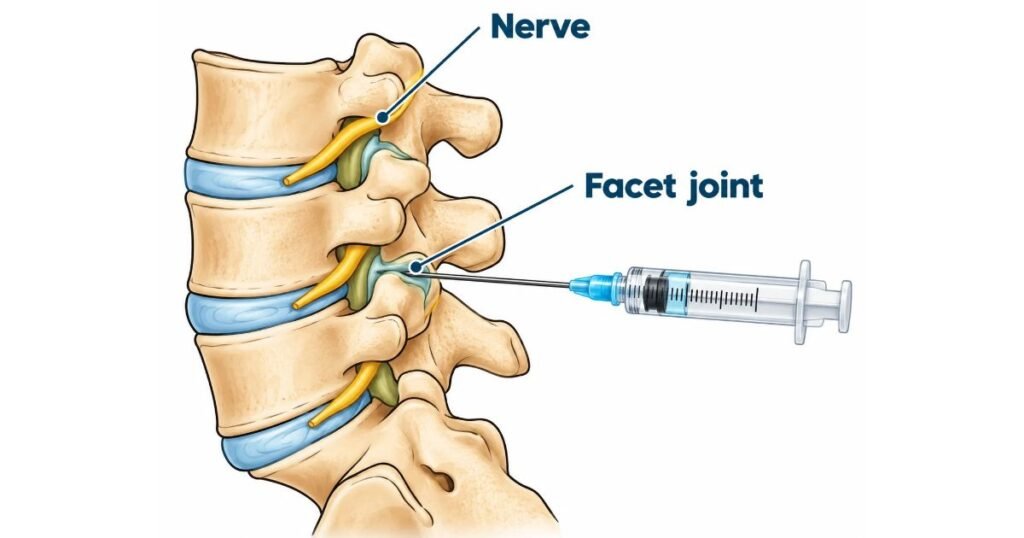
Before the procedure, your doctor will review your symptoms, medical history, current medication and allergies. Tell them if you have diabetes, take blood-thinning medication or have an active infection. Do not stop prescribed medicines unless your clinician advises you to do so.
During the procedure, the skin is cleaned, and local anaesthetic may be used to numb the area. Many spinal injections use fluoroscopy, or live X-ray imaging, to help guide the needle to the intended location. The precise technique depends on the injection being performed.
Afterward, you may be observed before going home. Your doctor will explain what to expect, when to resume normal activities and which symptoms require medical attention. Recovery instructions vary, so follow the advice given for your specific procedure.
What Are the Benefits and Risks of Spine Injections?
A spine injection may reduce pain enough to help you walk, sleep or participate in physiotherapy more comfortably. Some patients experience meaningful relief, while others notice little improvement or benefit only temporarily.
Dr. Rakesh Dhake can assess whether an injection is appropriate based on the suspected source of pain and the patient’s clinical findings. The goal is to choose a suitable treatment, not to assume that every case of back or neck pain requires an injection.
Possible side effects include temporary soreness or a short-lived increase in pain. Less common but serious complications include infection, bleeding, nerve injury and reactions to medication. Steroid injections can temporarily raise blood glucose levels, particularly in people with diabetes.
Tell your doctor about allergies, blood-thinning medicines, diabetes and any signs of infection before treatment. The expected benefits, alternatives and individual risks should be discussed before you decide to proceed.
When Should You Consult a Spine Specialist?
Consider seeing a spine specialist if back or neck pain persists, spreads into your arm or leg, or begins affecting your sleep, mobility or daily activities. An assessment can help identify the likely cause and determine whether conservative treatment, an injection or another approach may be suitable.
Dr. Rakesh Dhake is a spine surgeon at Zen Spine in Mumbai. If you’re experiencing persistent spinal pain, a consultation can help you understand your condition and discuss appropriate treatment options based on your individual needs.
Frequently Asked Questions
Q1. How many epidural injections can I have in a year?
Answer: There is no single number that is appropriate for everyone. The decision depends on your response to previous injections, the medication used, your medical history and the expected benefits of further treatment. Repeated injections should have a clear clinical purpose.
Q2. When can I return to work, drive or exercise?
Answer: This depends on the procedure, your symptoms and whether sedating medication was used. Follow your discharge instructions and ask your treating clinician when it is safe to drive, exercise, lift heavy objects or return to work.
Q3. Are steroid spine injections safe for people with diabetes?
Answer: They may be suitable for some people with diabetes, but steroids can temporarily increase blood glucose. Tell your doctor about your condition and ask whether additional glucose monitoring is needed after the procedure.
Q4. Is a spine injection a day-care procedure?
Answer: Many spine injections are performed without an overnight hospital stay. However, the setting and observation period depend on the procedure, your health and the treating facility’s arrangements.
Q5. How much does a spine injection cost in Mumbai?
Answer: The cost varies depending on the type of injection, facility, imaging requirements, medication and other applicable charges. Contact the treating clinic for an estimate based on the specific procedure recommended for you.