
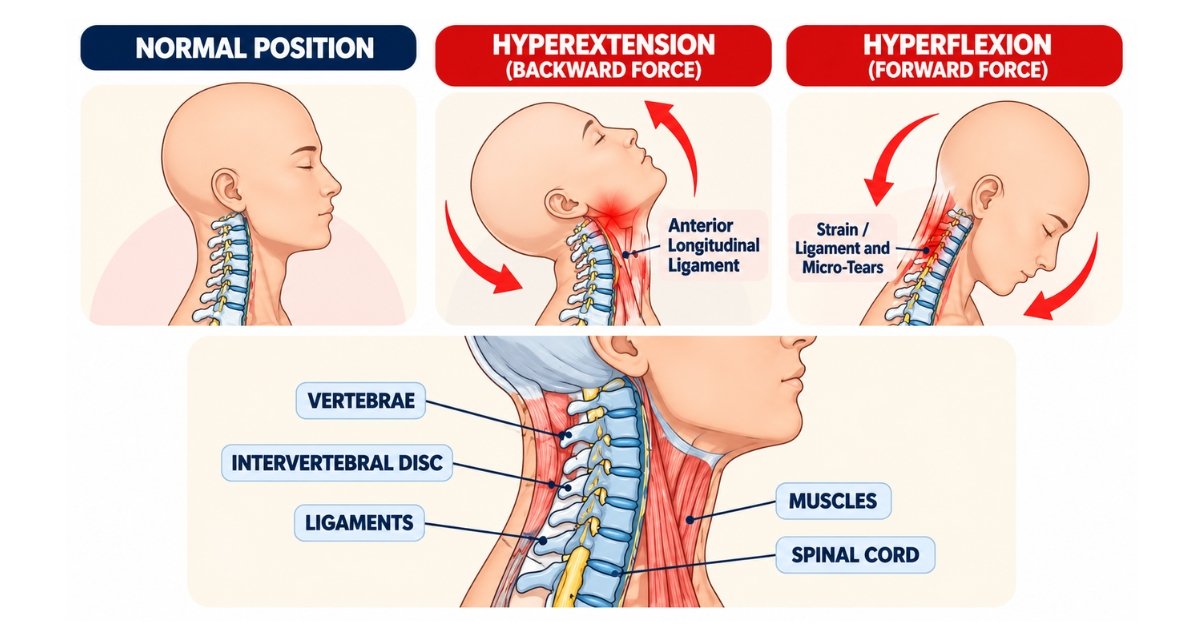
Neck pain after a road traffic accident can be alarming, even if there are no visible injuries. One of the most common causes is a whiplash injury, a soft tissue injury affecting the muscles, ligaments, and other structures of the cervical spine. While many people recover within a few weeks, some develop persistent pain that requires specialist evaluation and treatment.
Understanding the symptoms, diagnosis, recovery process, and treatment options can help you seek timely care and reduce the risk of long-term complications.
What Is a Whiplash Injury?
Whiplash injury is a neck injury caused by a sudden back-and-forth movement of the head, most commonly during a rear-end collision. This rapid motion can strain the neck muscles, stretch ligaments, irritate the facet joints, and, in some cases, affect the discs or nerves of the cervical spine.
Although car accidents are the most common cause, whiplash can also occur during sports injuries, workplace accidents, falls, or any event involving sudden force to the neck.
What Causes Whiplash?
Whiplash occurs when the neck experiences rapid acceleration and deceleration, forcing it beyond its normal range of motion.
Common causes include:
- Rear-end motor vehicle collisions
- Road traffic accidents
- Sports injuries
- Falls
- Physical assault or sudden blows to the head
- Workplace injuries involving sudden impact
The severity of symptoms does not always match the severity of the accident. Even low-speed collisions may cause significant soft tissue injury in some individuals.
Whiplash Injury Symptoms
Symptoms may appear immediately or develop over the next 24 to 48 hours.
| Common Symptoms | Possible Explanation |
| Neck pain | Muscle strain and ligament injury |
| Neck stiffness | Reduced range of motion due to inflammation |
| Headache | Often begins at the base of the skull |
| Shoulder pain | Pain may spread to the shoulders or upper back |
| Dizziness | Temporary balance disturbances may occur |
| Muscle tenderness | Soft tissue inflammation |
| Reduced neck movement | Pain and muscle spasm |
| Tingling or numbness | May suggest nerve irritation and requires medical assessment |
Some patients also report fatigue, difficulty concentrating, or disturbed sleep after the injury. These symptoms should be evaluated in the context of the overall clinical picture.
Can Whiplash Be Serious?
Most whiplash injuries are mild and improve with conservative treatment. However, severe pain, weakness, numbness, difficulty walking, or loss of bladder or bowel control may indicate a more serious cervical spine injury that requires urgent medical evaluation.
When Should You Seek Emergency Medical Care?
Seek immediate medical attention if you experience:
- Severe neck pain after trauma
- Weakness in the arms or legs
- Numbness that is worsening
- Difficulty walking or maintaining balance
- Loss of bladder or bowel control
- Loss of consciousness
- Persistent vomiting
- Severe headache after a head injury
- Confusion or changes in alertness
These symptoms may indicate a fracture, spinal cord injury, concussion, or other serious condition.
How Is Whiplash Diagnosed?
There is no single test that confirms whiplash. Diagnosis is based on your symptoms, the mechanism of injury, and findings from a physical examination.
During your consultation, your doctor may assess:
- How the injury occurred
- Location and severity of pain
- Neck range of motion
- Muscle tenderness
- Reflexes
- Muscle strength
- Sensation in the arms and hands
- Signs of nerve compression or spinal cord involvement
A thorough neurological examination helps identify patients who require additional investigations.
Do You Need an MRI or X-ray?
Imaging is not required for every patient with whiplash. Your doctor will recommend imaging based on your symptoms, examination findings, and the possibility of fractures or nerve injury.
| Imaging Test | Purpose | When It May Be Recommended |
| X-ray | Detects fractures or instability | Initial assessment after trauma when indicated |
| CT Scan | Provides detailed images of bones | Suspected fractures or high-impact injuries |
| MRI | Evaluates discs, ligaments, nerves, and spinal cord | Persistent pain, neurological symptoms, or suspected soft tissue injury |
Normal imaging does not always rule out soft tissue injury because muscles and ligaments may be affected without visible changes on standard X-rays.
Whiplash Injury Treatment
Treatment depends on the severity of the injury, associated conditions, and your individual clinical evaluation.
Most patients improve with conservative care.
Pain Management
Your doctor may recommend:
- Paracetamol or other pain-relieving medication
- Short-term use of anti-inflammatory medicines when appropriate
- Muscle relaxants in selected cases
Medication should always be taken as advised by a qualified healthcare professional.
Early Movement and Activity
Current evidence generally supports gentle movement rather than prolonged bed rest. Remaining active within comfortable limits may help restore normal neck function once serious injury has been excluded.
Physiotherapy
Physiotherapy plays an important role in recovery by helping to:
- Improve range of motion
- Reduce pain
- Restore muscle strength
- Improve posture
- Reduce stiffness
- Support return to daily activities
Treatment plans are individualized and progress according to symptoms.
Home Exercises
Simple exercises may be introduced after assessment by a healthcare professional.
Examples include:
- Gentle neck range-of-motion exercises
- Chin tuck exercises
- Shoulder blade squeezes
- Posture correction exercises
Avoid exercises if you have severe pain, neurological symptoms, or have not yet been medically evaluated after significant trauma.
Is Surgery Required?
Surgery is rarely needed for whiplash itself. However, it may be considered if investigations reveal fractures, spinal instability, significant disc injury causing nerve compression, or spinal cord injury.
Can Untreated Whiplash Become Chronic?
Yes. Although many patients recover fully, untreated or inadequately managed whiplash may contribute to persistent neck pain, reduced mobility, headaches, and chronic pain in some individuals. Early assessment and appropriate rehabilitation may reduce this risk.
How Can You Help Prevent Whiplash?
While not all injuries can be prevented, these measures may reduce risk:
- Wear your seat belt correctly.
- Adjust the head restraint to the correct height.
- Maintain good driving posture.
- Follow safe driving distances.
- Use appropriate protective equipment during sports.
- Strengthen neck and upper back muscles under professional guidance.
Myths vs Facts
| Myth | Fact |
| A normal X-ray means there is no injury. | Soft tissue injuries often do not appear on X-rays. |
| Complete bed rest speeds recovery. | Gentle movement is usually encouraged once serious injury is excluded. |
| Every patient needs an MRI. | MRI is recommended only when clinically indicated. |
| Whiplash always causes permanent pain. | Most patients recover with appropriate treatment. |
Key Takeaways
- Whiplash is a common soft tissue injury of the cervical spine.
- Neck pain and stiffness are the most frequent symptoms.
- Serious neurological symptoms require urgent medical attention.
- Diagnosis is based on history, physical examination, and imaging when necessary.
- Most patients recover with conservative treatment, physiotherapy, and gradual return to activity.
- Persistent symptoms should be evaluated by a spine specialist to identify underlying conditions and guide further management.
When to Consult a Spine Specialist
If your neck pain continues beyond the expected recovery period, limits your daily activities, or is associated with numbness, weakness, severe headaches, or arm pain, consultation with a spine specialist is recommended. At Zen Spine, Dr. Rakesh Dhake, a Spine Specialist and Neck Pain Specialist in Mumbai, evaluates patients with evidence-based clinical assessment and recommends individualized treatment based on the underlying cause of symptoms.
Frequently Asked Questions
Q1. How long does whiplash take to heal?
Answer: Many people improve within a few weeks, while others require several months. Recovery depends on the severity of the injury, associated conditions, and following the recommended treatment plan.
Q2. Can MRI detect whiplash?
Answer: MRI does not diagnose whiplash directly. However, it can identify ligament injuries, disc injuries, nerve compression, or spinal cord abnormalities when these are suspected during clinical evaluation.
Q3. Should I wear a neck collar?
Answer: Soft collars are not routinely recommended for prolonged use because extended immobilization may delay recovery. Your doctor will advise whether temporary support is appropriate for your specific injury.
Q4. Can I exercise after a whiplash injury?
Answer: Gentle exercises are often introduced early as part of rehabilitation, but they should only begin after a healthcare professional has ruled out serious injury and advised an appropriate program.
Q5. When should I see a spine specialist?
Answer: You should seek specialist evaluation if neck pain persists, symptoms worsen, neurological symptoms develop, or daily activities remain limited despite initial treatment.