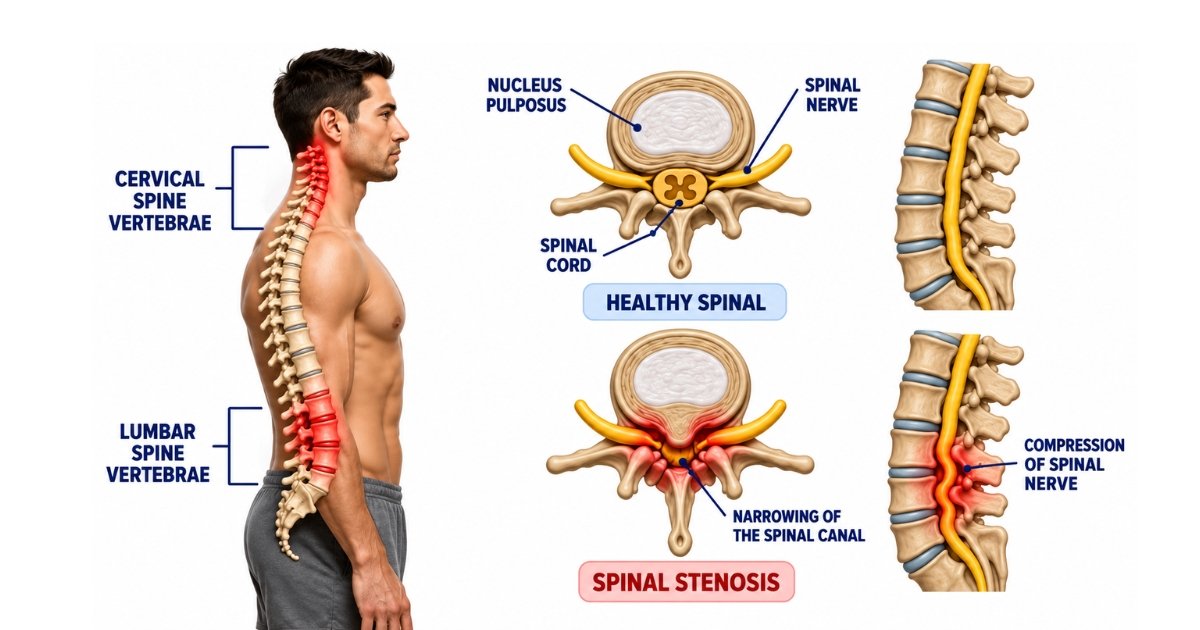
Lumbar spinal stenosis is a condition in which the spinal canal in the lower back becomes narrower, putting pressure on the nerves that travel through it. This narrowing of the spinal canal can lead to pain, numbness, weakness, and difficulty walking.
The condition is most common in older adults because of age-related spine changes, although younger people can also develop it due to injuries or inherited spinal anatomy. Understanding lumbar spinal stenosis symptoms, diagnosis, and treatment can help people seek timely care and maintain mobility.
In this guide, we explain what causes lumbar spinal stenosis, how it is diagnosed, and the treatment options available for managing this common lumbar spine condition.
What Is Lumbar Spinal Stenosis?
Lumbar spinal stenosis is a condition where the spinal canal in the lower back narrows and compresses nearby nerves. This nerve compression in the lower back can cause pain, tingling, numbness, weakness, and walking difficulties. Symptoms often develop gradually and may worsen over time.
The lumbar spine is the lower portion of the spine. It contains nerves that travel from the spinal cord into the legs. When spinal canal narrowing occurs, there is less space for these nerves.
As pressure on the nerves increases, people may experience lower back pain and leg pain, numbness in the legs, or mobility limitations. Symptoms often become more noticeable during standing or walking and may improve when sitting or bending forward.
What Causes Lumbar Spinal Stenosis?
The most common causes of lumbar spinal stenosis are age-related degenerative spinal conditions that reduce the available space within the spinal canal.
Age-related degeneration
As people age, the spine naturally undergoes wear and tear. Lumbar degeneration can lead to structural changes that contribute to spinal canal narrowing.
Osteoarthritis
Spinal arthritis can affect the joints of the spine. Over time, these joints may enlarge and reduce the space available for nearby nerves.
Bone spurs
The body may form extra bone in response to arthritis. These bone spurs can protrude into the spinal canal and increase nerve pressure.
Thickened ligaments
Ligaments help support the spine. With ageing, they can become thicker and less flexible, contributing to spinal canal narrowing.
Herniated discs
A damaged or bulging disc may extend into the spinal canal and compress nearby nerves.
Previous spinal injuries
Past injuries or fractures can alter spinal alignment and contribute to lower back nerve compression.
Congenital spinal narrowing
Some individuals are born with a naturally narrow spinal canal, making symptoms more likely to develop later in life.
What Are the Symptoms of Lumbar Spinal Stenosis?
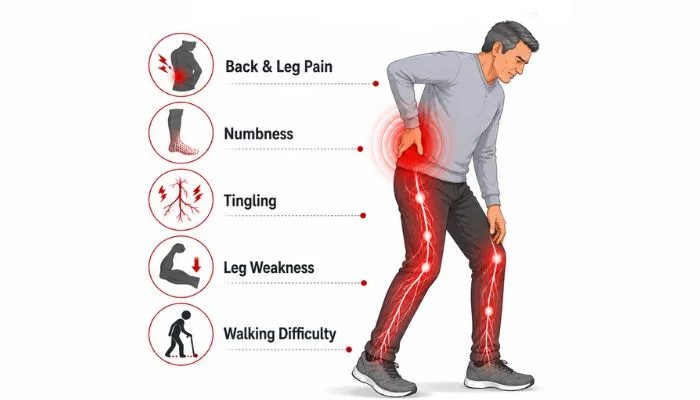
Symptoms of lumbar spinal stenosis occur when compressed nerves in the lower back cannot function normally. The severity varies from person to person.
Common lumbar spinal stenosis symptoms include:
- Lower back pain and leg pain
- Numbness in legs or feet
- Tingling sensation in the lower limbs
- Lower limb weakness
- Walking difficulties or reduced walking distance
Many people notice that symptoms worsen when standing upright or walking. Sitting down or leaning forward often provides relief because it temporarily reduces pressure on the affected nerves.
Some individuals may also experience balance problems and chronic lower back pain that interferes with daily activities.
How Is Lumbar Spinal Stenosis Diagnosed?
Lumbar spinal stenosis diagnosis involves a combination of symptom assessment, physical examination, and spinal imaging to identify nerve compression and spinal canal narrowing.
At Zenspine, the diagnostic process begins with a detailed clinical evaluation. Dr. Rakesh Dhake will assess your symptoms, medical history, walking ability, and any signs of nerve compression to determine whether further investigation is needed.
During a physical examination, the doctor checks movement, strength, sensation, reflexes, and balance. A neurological assessment helps identify affected nerves.
Imaging tests are often used to confirm the diagnosis:
- MRI (Magnetic Resonance Imaging): The most detailed test for assessing nerves, discs, and soft tissues. A lumbar spinal stenosis MRI can clearly show areas of narrowing.
- CT Scan: Useful when MRI is not suitable or when additional bone detail is required.
- X-rays: Help identify arthritis, spinal alignment issues, and other structural changes.
If symptoms are affecting your daily activities, seeking an evaluation from a spine specialist such as Dr. Rakesh Dhake at Zenspine may help provide clarity on your diagnosis and treatment options.
Lumbar Spinal Stenosis vs Sciatica
| Feature | Lumbar Spinal Stenosis | Sciatica |
| Cause | Narrowing of the spinal canal | Irritation or compression of the sciatic nerve |
| Symptoms | Back pain, leg pain, numbness, weakness, walking difficulties | Pain radiating along one leg, often sharp or burning |
| Age Group | More common in older adults | Can occur at any age |
| Walking Tolerance | Often reduced due to nerve pressure | Usually less affected |
| Nerve Involvement | Multiple nerve roots may be affected | Typically one nerve root involved |
| Treatment | Physiotherapy, medication, activity modification, surgery if needed | Physiotherapy, medication, treating the underlying cause |
What Are the Treatment Options for Lumbar Spinal Stenosis?
Lumbar spinal stenosis treatment aims to reduce symptoms, improve mobility, and maintain quality of life. Many patients benefit from non-surgical treatment, while surgery may be considered for severe or progressive symptoms.
Non-Surgical Treatments
Most people begin with conservative treatment approaches.
These may include:
- Physiotherapy and supervised exercise programmes
- Activity adjustments to reduce symptom triggers
- Weight management and lifestyle modifications
- Pain management strategies recommended by a clinician
- Exercises for lumbar spinal stenosis that improve flexibility and strength
A personalised treatment plan is often the most effective approach for long-term spine care.
Surgical Treatment
Surgery may be considered when symptoms significantly affect daily life or when nerve compression causes worsening weakness or mobility problems.
The most common lumbar stenosis surgery is a spinal decompression procedure. The goal is to create more space around the affected nerves and relieve pressure.
Recovery varies depending on the procedure performed, overall health, and rehabilitation progress. Not everyone with spinal stenosis in the lower back requires surgery.
Important Points to Know
- Lumbar spinal stenosis is caused by narrowing of the spinal canal in the lower back.
- Nerve compression can lead to pain, numbness, tingling, weakness, and walking difficulties.
- Age-related degeneration is the most common cause.
- MRI is often the most useful imaging test for diagnosis.
- Both non-surgical and surgical treatments can help manage symptoms effectively.
Understanding Lumbar Spinal Stenosis: Guidance from Dr. Rakesh Dhake
Lumbar spinal stenosis is a common condition involving spinal canal narrowing and nerve compression in the lower back. It can cause lower back pain, leg symptoms, mobility limitations, and reduced quality of life.
A thorough lumbar spinal stenosis diagnosis typically includes a clinical assessment and spinal imaging such as MRI. Treatment may involve physiotherapy, exercise, lifestyle modifications, pain management strategies, or spinal decompression treatment when appropriate.
If symptoms persist or worsen, consulting an experienced spine specialist is important. At Zenspine, Dr. Rakesh Dhake focuses on evidence-based spine care and helps patients understand their condition and treatment options. Accurate diagnosis and personalised management remain key to maintaining spinal health and mobility.
Frequently Asked Questions
Is lumbar spinal stenosis serious?
Lumbar spinal stenosis can range from mild to severe. Many people manage symptoms successfully with conservative treatment. However, severe nerve compression may lead to significant weakness, reduced mobility, or bladder and bowel changes that require prompt medical assessment.
Can lumbar spinal stenosis heal on its own?
The structural narrowing itself usually does not reverse naturally. However, symptoms may improve with physiotherapy, exercise, lifestyle changes, and other non-surgical treatments. Many people achieve good symptom control without surgery.
What is the best treatment for lumbar spinal stenosis?
The best treatment depends on symptom severity, overall health, and the degree of nerve compression. Physiotherapy, exercise programmes, and activity modification are commonly recommended. Surgery may be considered when conservative treatments do not provide adequate relief.
Is walking good for lumbar spinal stenosis?
Walking can be beneficial for many people with lumbar spinal stenosis, but tolerance varies. Some individuals experience increased symptoms during prolonged walking. A healthcare professional can recommend a safe and personalised exercise plan.
Can lumbar spinal stenosis cause leg weakness?
Yes. Pressure on spinal nerves can interfere with nerve signals to the legs, resulting in weakness, numbness, or reduced coordination. Progressive weakness should always be evaluated by a healthcare professional.
Does everyone with lumbar spinal stenosis need surgery?
No. Most patients do not require surgery. Non-surgical treatment for lumbar spinal stenosis is often effective in managing symptoms. Surgery is generally reserved for severe, persistent, or progressive cases.