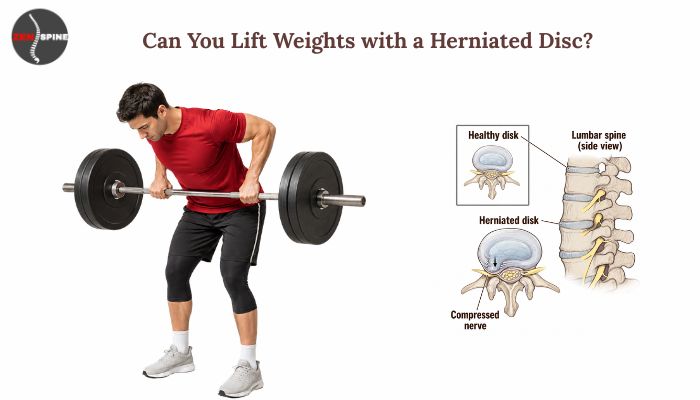
Does a herniated disc mean you have to stop lifting weights forever?
Many people believe a slipped disc automatically ends gym training. Once they hear the diagnosis, they assume heavy lifting, resistance work, and strength training are permanently off limits. That belief is common, but it is often inaccurate.
For many patients, the question is not whether lifting can ever happen again. The better question is whether the spine can tolerate loading right now, what movements may need modification, and how to return without aggravating symptoms. That is a much more useful way to think about recovery.
A lumbar disc herniation can behave very differently from one person to another. Some people have mild back pain with little functional limitation. Others have severe nerve compression symptoms, radiating leg pain, numbness, or weakness. Those situations should never be treated as though they are the same.
That is why the answer to ‘Can you lift weights with a herniated disc?’ is often ‘Yes’ for some people, but with important conditions.
How to Lift Correctly
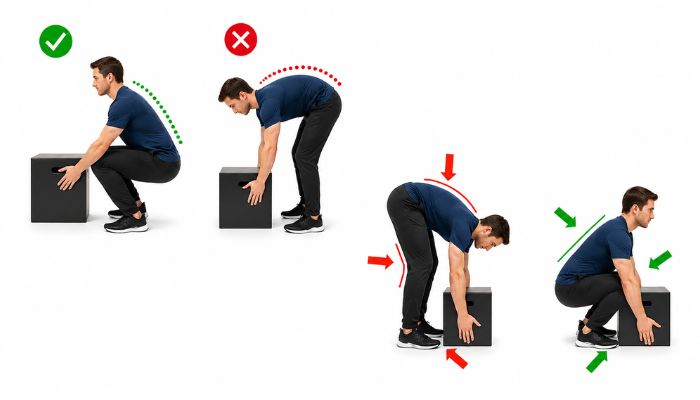
Proper lifting technique matters for everyone, but it becomes even more important with a herniated disc.
Whether someone has a disc problem or a healthy spine, lifting should come from the hips and knees rather than the lower back. During bending or picking something up, the spine should stay neutral and supported while the hips and knees do most of the work.
A common mistake is bending from the waist or rounding and arching the back while lifting. That can increase pressure inside the spinal discs, called intradiscal pressure. In someone with lumbar disc herniation, higher disc pressure may place more stress on the injured disc and can aggravate symptoms.
Using proper lifting mechanics helps reduce unnecessary strain on the spine. Keeping the back straight, hinging through the hips, bending through the knees, and avoiding loaded forward flexion can support safer movement patterns.
This is one of the foundations of spine safe strength training, whether someone is managing a slipped disc or trying to prevent one.
Can Some People Lift Weights Safely With a Herniated Disc?
Yes, some people can continue training or return to lifting safely, but it depends on several factors. Symptom severity matters. The exact diagnosis matters. Nerve involvement matters. So do lifting technique, tissue irritation, and the amount of load being used.
A mild disc bulge is not the same as an acute slipped disc causing significant nerve irritation. One person may tolerate carefully managed resistance training. Another may need symptoms treated first before returning to the gym. That difference is why generic advice often fails.
In practice, weight lifting with herniated disc concerns usually come down to load tolerance. Can the spine handle the demand being placed on it without provoking symptoms? That question matters far more than simply asking whether lifting is “allowed.”
Dr. Rakesh Dhake often explains to patients that a disc injury does not always require avoiding resistance work forever. More often, it means training may need to be adjusted while healing and function improve.
Why Some Movements Feel Fine While Others Flare Symptoms
Patients often notice that some gym movements feel manageable while others trigger pain down the leg. That pattern is not random. It often reflects how different movements load the spine.
Poorly controlled bending under load, repeated loaded spinal flexion, or twisting with resistance may increase stress on a symptomatic disc. When symptoms are active, these patterns may aggravate irritation.
Often the issue is not the movement itself, but the way it is performed. That is why proper lifting mechanics matter so much.
A controlled hip hinge performed with good spinal positioning is very different from pulling heavy weight with technique breakdown. Those differences often determine whether a movement is tolerated or provocative.
That principle applies throughout spine safe strength training.
Exercises to Avoid With Herniated Disc Symptoms
When people ask about exercises to avoid with herniated disc problems, the better way to think about it is which movements currently provoke symptoms.
Movements that repeatedly trigger radiating pain, increase nerve symptoms, or involve poorly controlled loaded spinal flexion may need caution. The concern is often not a permanent ban on certain lifts but avoiding movements that exceed current tissue tolerance.
These are often practical disc bulge exercise precautions, not lifelong restrictions.
That distinction matters.
Common Myths About Lifting With a Herniated Disc
Myth: A slipped disc means you should never lift again.
Fact: Many people return safely with the right progression.
Myth: Deadlifts are always dangerous.
Fact: Poor mechanics and overload are often the bigger issue.
Myth: Rest alone heals every disc problem.
Fact: Guided movement is often part of recovery.
When Lifting Should Be Avoided
There are situations where training should pause until medical evaluation.
If lifting increases progressive leg weakness, worsening numbness, severe radiating pain, or other nerve compression symptoms, continuing to push through training may be unwise.
Symptoms that worsen after every session instead of settling can also be a warning sign.
Those situations call for assessment, not forcing more training.
In these cases, working with a specialist can help determine whether symptoms reflect ordinary disc irritation or something requiring more structured treatment.
Returning to the Gym Safely
Many patients can go back to training after a disc injury, but gradual progression matters.
A common mistake is trying to resume previous training loads too early. That often leads to flare-ups.
Returning usually works better when one variable changes at a time. Increase load slowly. Build tolerance gradually. Let symptoms guide progression.
That approach often works far better than jumping back into old routines.
In many cases, success depends less on how quickly someone returns and more on how intelligently they progress.
A Practical Perspective From Spine Care
A slipped disc does not always mean giving up strength work.
Often it means changing how you train. Sometimes that means focusing first on stabilization. Sometimes it means correcting lifting mechanics. Sometimes it means treating symptoms before returning to heavier resistance. Those are different paths, but many people do return to training.
The goal is not simply avoiding pain. It is restoring function. That matters.
If You Are Unsure Whether Lifting Is Safe
If you have been avoiding the gym because of fear after a slipped disc diagnosis, it may help to know that many people do return to training with the right approach. The path back often depends less on avoiding movement and more on choosing the right progression.
If symptoms persist, leg pain continues, or you are unsure what your spine can safely tolerate, getting evaluated can provide clarity. Dr. Rakesh Dhake helps patients with disc problems understand when activity can continue, when it needs modification, and when treatment may be needed. Sometimes the right plan is what helps people move forward with confidence again.
FAQs.
Q1. Can you lift weights with a herniated disc?
Answer: Some people can lift weights safely with a herniated disc, but it depends on symptoms, nerve involvement, lifting technique, and load. Many patients need modified training and gradual progression rather than complete avoidance.
Q2. Are deadlifts bad for slipped discs?
Answer: Not always. Poorly performed or overloaded deadlifts may aggravate symptoms, but modified deadlifts may be appropriate in some cases.
Q3. What exercises should be avoided with a herniated disc?
Answer: Movements that provoke radiating pain, heavy loaded spinal flexion, and poorly controlled twisting may need caution depending on symptoms.
Q4. Can I go back to the gym after a disc bulge?
Answer: Many people can return gradually after a disc bulge with symptom-guided progression and proper mechanics.