
Most people expect wrinkles or greying hair with age. Very few expect their spine to start ageing in their 30s or early 40s. Yet many working professionals and parents now complain of stiffness, reduced flexibility, and persistent back discomfort much earlier than expected.
Your spine ages slowly and quietly. It does not suddenly fail. It gives signals. The problem is that most people ignore these signals until pain starts interfering with daily life.
Understanding the signs of spinal aging early helps you take corrective steps before permanent damage develops. Let us look at how spinal degeneration begins, what symptoms appear first, and what you can do about it.
What Does Spinal Aging Really Mean
Spinal aging does not simply mean getting older. It refers to structural changes inside the spine. These include gradual spinal degeneration affecting the intervertebral discs, joints, ligaments, and bones.
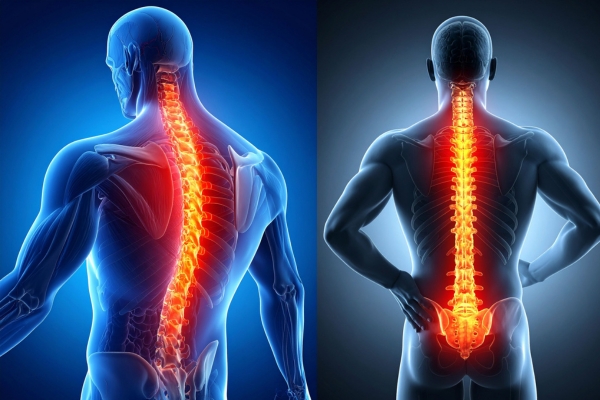
The spine works like a flexible pillar. Between each bone lies a soft cushion called a disc. These discs absorb shock when you walk, bend, or lift objects. Joints at the back of the spine guide movement. Strong muscles and ligaments support everything.
As age increases, the following changes may occur:
- Discs lose water content and become thinner
- Cartilage in joints wears down
- Bone density may reduce
- Muscles weaken due to inactivity
- Ligaments lose elasticity
These age related spine changes happen naturally. However, poor posture, long sitting hours, lack of exercise, and chronic inflammation can speed up this process.
How to Know If Your Spine Is Aging Faster Than Normal
Many patients ask, “How to know if your spine is aging?” The answer lies in recognising early warning symptoms. These symptoms may appear mild in the beginning.
1. Persistent Back Stiffness in the Morning
One of the most overlooked lower back pain aging signs is stiffness after waking up.
When discs start losing hydration, they cannot maintain their height properly. During sleep, reduced movement allows joints to become less lubricated. This leads to tightness and difficulty bending forward in the morning.
Common back stiffness in the morning causes include:
- Early spinal arthritis symptoms
- Disc dehydration symptoms
- Facet joint degeneration signs
If stiffness lasts more than 20 to 30 minutes daily, it may indicate early structural changes.
2. Chronic Back Pain in Young Adults
Years ago, back degeneration was common after 60. Today, chronic back pain in young adults is rising due to sedentary work patterns.
When you sit for long hours, pressure inside lumbar discs increases. Over time, this can trigger lumbar spine degeneration signs. You may feel dull aching pain in the lower back that worsens by evening.
Pain that lasts more than three months is not normal muscular strain. It requires evaluation for early spine wear and tear symptoms.
3. Neck Tightness and Cervical Spine Aging Symptoms
Frequent mobile use and laptop work place continuous strain on the neck. The head weighs around five kilograms. When you bend forward, pressure on the cervical spine increases.
Cervical spine aging symptoms may include:
- Neck stiffness
- Pain while turning the head
- Tingling in arms
- Mild nerve pain in lower back combined with neck issues in some cases
When discs shrink, the space available for nerves reduces. This can cause nerve compression and radiating pain.
4. Reduced Flexibility and Difficulty Bending
If tying shoelaces or picking up objects feels harder than before, it may not just be muscle tightness. It may indicate early spinal degeneration.
Reduced flexibility often appears when disc height decreases. This also affects posture imbalance and may cause visible changes in body alignment.
5. Recurrent Sciatica Symptoms
Sciatica symptoms such as leg pain, tingling, or numbness occur when nerves in the lower back become irritated. Disc bulge early signs or slipped disc early symptoms often start with mild back discomfort before progressing to leg pain.
Ignoring these signals may increase nerve compression over time.
Early Signs of Degenerative Disc Disease Explained Simply
Discs act like shock absorbers. In youth, they contain more water. With age, water content reduces. This process is called disc dehydration.
The table below explains how disc health changes over time.
| Disc Condition | What Happens Inside | Symptoms You May Notice |
| Healthy Disc | High water content, good height | Flexible movement, no pain |
| Early Disc Dehydration | Reduced hydration, slight height loss | Morning stiffness, mild back pain |
| Moderate Degeneration | Thinner disc, reduced shock absorption | Pain after sitting, occasional nerve irritation |
| Advanced Degeneration | Disc collapse, bone changes | Persistent pain, sciatica symptoms |
Early signs of degenerative disc disease usually start with mild stiffness and pain during prolonged sitting. Many people ignore these symptoms, assuming they are temporary.
Lumbar Spine Degeneration Signs You Should Not Ignore
The lower back supports most body weight. It also absorbs impact during walking and lifting.
Common lumbar spine degeneration signs include:
- Dull aching pain after standing long hours
- Pain relief when lying down
- Intermittent leg pain
- Muscle spasms
If these symptoms appear regularly, your spine may be ageing faster than expected.
Osteoporosis Spine Early Signs
Bone health plays an important role in spinal stability. Reduced bone density increases fracture risk.
Early osteoporosis spine early signs may include:
- Sudden back pain after minor strain
- Gradual loss of height
- Rounded upper back posture
A bone density test helps detect early changes. Timely treatment prevents vertebral fractures.
Is Sitting Aging My Spine
Many professionals spend eight to ten hours daily sitting. The answer to “Is sitting aging my spine?” is yes, if sitting posture remains poor.
Sitting increases disc pressure more than standing. Without core muscle support, spinal load shifts unevenly. Over time, this may cause:
- Poor posture back pain
- Office sitting back pain
- Early spinal arthritis symptoms
Standing breaks every 30 to 45 minutes reduce disc stress.
Posture Mistakes That Age Your Spine
Small daily habits influence spinal health. Common posture mistakes that age your spine include slouching, bending the neck forward while using mobile phones, and lifting heavy objects with a rounded back.
When posture remains incorrect for years, cartilage wear increases. Chronic inflammation develops inside joints. This leads to spondylosis early symptoms.
How to Prevent Spine Aging
You cannot stop natural aging, but you can slow spinal degeneration. Prevention works best when started early.
Maintain Strong Core Muscles
Strong abdominal and back muscles support the spine and reduce load on discs. Simple strengthening routines improve stability.
Stay Physically Active
Regular movement improves blood flow to spinal structures. Movement also keeps joints lubricated and reduces stiffness.
Focus on Nutrition
Foods for spinal disc health include calcium rich foods, vitamin D, protein, and omega 3 fatty acids. Adequate hydration supports disc function and reduces disc dehydration symptoms.
Correct Your Sitting Posture
Keep your back supported. Place your screen at eye level. Avoid bending your neck for long periods.
Seek Early Evaluation
If symptoms persist, a spine screening consultation helps identify early spine damage symptoms before they worsen.
In cases where structured non surgical spine treatment does not provide relief, selected patients may benefit from minimally invasive spine care. Dr. Rakesh Dhake is regarded as the best minimally invasive spine surgeon in Mumbai and focuses on offering advanced solutions only when conservative methods are insufficient.
When Should You Consult a Spine Specialist
Do not ignore symptoms if:
- Pain lasts more than six weeks
- Numbness or weakness develops
- Daily activities become difficult
- You notice repeated episodes of back pain
Early assessment prevents progression of degenerative spine disease early warning signs.
Final Thoughts
Your spine reflects your daily habits more than your age. Stiffness, recurring pain, and posture changes are early signs that your spine needs attention. Recognising the signs of spinal aging at the right time allows you to slow down degeneration and protect long term mobility.
If you notice ongoing symptoms, consider consulting Dr. Rakesh Dhake at Zen Spine for a structured evaluation and personalised care plan designed to keep your spine healthy and functional.
Frequently Asked Questions
Q1. What are the first signs of spinal aging?
Answer: Morning stiffness, reduced flexibility, and mild back pain after prolonged sitting are common early signs.
Q2. Can spinal degeneration start in your 30s?
Answer: Yes. Sedentary lifestyle, poor posture, and weak core muscles can lead to spine degeneration symptoms in 30s.
Q3. Are disc dehydration symptoms reversible?
Answer: Hydration loss itself is age related, but lifestyle correction can slow progression and reduce pain.
Q4. What are early spinal arthritis symptoms?
Answer: Back stiffness in the morning, localised pain, and limited range of motion are typical signs.
Q5. How can I prevent lumbar spine degeneration signs?
Answer: Maintain good posture, stay active, strengthen core muscles, and avoid prolonged sitting.
Q6. Is chronic back pain in young adults serious?
Answer: Persistent pain lasting more than three months needs evaluation to rule out early spine damage symptoms.